


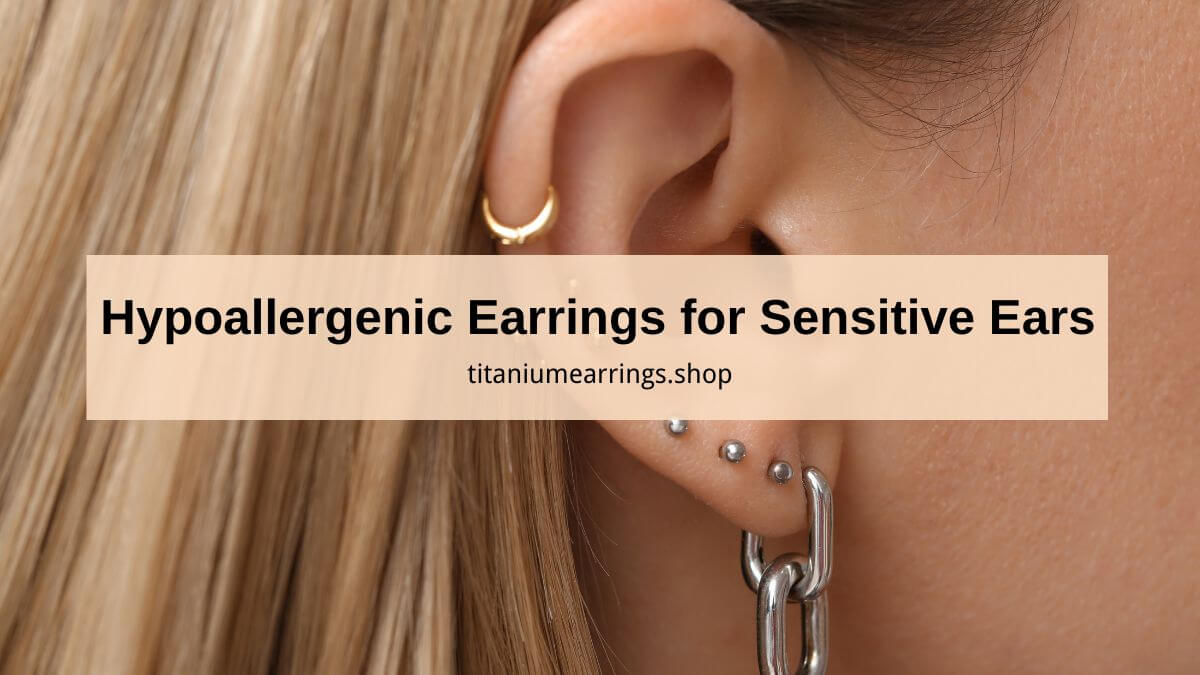
If you suffer from some form of allergies, even if you’re not getting a piercing or a tattoo or what have you, this is going to be an interesting article for you to read. It’s going to give you some good information and things to think about in the future with living with allergies.
Understanding the Term “Hypoallergenic”
What does it mean when a piercing is hypoallergenic? Hypoallergenic is one of those terms that I hear a lot. I hear professional piercers use it. I am asked on a regular basis, “Is your jewelry hypoallergenic?” or told “I can only wear hypoallergenic jewelry.”
So I always try to make a point of trying to explain that that term doesn’t mean what you think it does.
The History of Hypoallergenic
Hypoallergenic was started—the term was first used by the cosmetic industry in the 1950s, possibly as far back as the 1930s. It was a way of marketing cosmetics that were, as they put it, “slightly less likely to cause an allergic reaction.”
Let’s let that sink in. It’s slightly less likely that you’re going to have an allergic reaction to something.
And basically, in essence, what they’re saying is, “Hey, the allergen might be in there, but there’s a very little amount of it. Not so much as you would have in other products that we sell.”
The Problem with Certification
Problem with this is the only thing that’s out there that designates it and certifies something—it’s not really certified. It’s in-house testing.
So, anybody who has a product can say that something is hypoallergenic without having to come up with the documentation produced by a third-party lab that states, “Yes, in fact, it is.”
So, you’re basically—it’s buyers beware.
What does it mean when a piercing is hypoallergenic? To truly understand this, let’s talk about what an allergic reaction is and what causes it.
What Are Allergies?
Let’s talk about what an allergic reaction is and what causes it. What are allergies in essence? Kind of a layman version of that.
What happens is for one reason or another, your body decides—your immune system—that one thing for one reason or another is a dangerous foreign pathogen. And it reacts with trying to expel it, trying to fight it off, trying to contain it, and trying to block further invasion.
How Your Immune System Reacts
How your immune system reacts is this. It does kind of the same way it would if a foreign body worked its way into a cut or a wound of some sort. The first thing it does is it releases histamines and other chemicals which dilate blood vessels and leak fluid into the area that is affected.
In essence, it’s trying to seal off the entrance and make sure nothing more comes in. Basically, this is part of the process of trying to isolate whatever that foreign body is, expel it, and avoid any further intrusion. So, it’s kind of just sealing up everything.
It’ll also produce hives and other things, other signs that you need to do something about this. With airborne allergens, it will also produce a runny nose and watery eyes as another way of expelling whatever that foreign thing is—the allergen—to keep it from coming into the body and causing further havoc.
How to Avoid Allergic Reactions
How do you avoid these allergic reactions? First thing and foremost is determine what is causing that allergy and avoiding it.
And this involves turning over packaging and looking at the ingredients. If there’s things—if you know you’re allergic to something—avoid it.
Additionally, seek products that have been third-party tested and certified that they don’t have that allergen in it. I don’t know really how convenient or how easy it is to find these.
But seeking out products that absolutely, for sure don’t have those things in it is a better option than buying something that has hypoallergenic in the title. So what does it mean when a piercing is hypoallergenic? Now, let’s move on to the specific materials used in body jewelry.
Hypoallergenic Metals: What You Need to Know
Biocompatible or Implant Grade Materials
Biocompatible or implant grade has to reach a standard set by the medical industry. And that standard is the same for implants meaning hip replacements, screws, parts in pacemakers, etc. that can be inside the body.
It’s not highly corrosive so it’s not going to deteriorate. And it’s not going to cause allergic reactions or has a very limited chance of doing so.
Titanium


For example, titanium ASTM—which is the third-party testing organization—F136 contains absolutely no nickel. That is what that certification means.
There are different grades of titanium. And some of them may or may not have trace elements in it that will cause reactions or they may be more corrosive than that particular style or that particular standard.
Also, there’s F1295 I believe that is a little less known and not as widely used. But when it comes to jewelry, F136 is the most common one used in the body piercing industry.
Gold
14-karat gold can be certified to be nickel-free. It can be tested to ensure that there is no nickel in it.
Niobium
Implant grade niobium usually contains no nickel. It’s ASTM—I believe. I don’t know if there’s an F in front of that one or not. I can’t remember. It is nickel-free. It’s very hard to find. It’s not the best material to work with for most people.
It’s not very practical when it comes to more modern jewelry with threading and threadless, etc. There’s a few manufacturers out there that do make it. And the nice thing about it is it can be anodized into black. It’s kind of a charcoal color, but it’s black.
Surgical Stainless Steel
Implant grade surgical stainless steel is something that’s thrown around a lot. You’re going to see a lot of 316L and various different versions of surgical stainless steel that are marketed as safe.
The reality is unless it has that ASTM number F138, you don’t know exactly what that’s made out of.
316L can determine everything from motorcycle spokes all the way to high-grade medical equipment. It’s important to make sure that it’s been third-party tested and certified.
Why Professional Piercing Is Expensive
One of the reasons why professional piercing is as expensive as it is—a lot of our costs, I would say, if you sat down and you took overhead basic overhead out of the equation and just focused on the materials that are on the tray during the setup to do the piercing, the jewelry is four times the cost of all the other materials in most cases.
So it is the biggest expense we have. We tend to be very proud of it for that reason. And we take pride in providing quality jewelry.
You’re gonna pay more for it, but you’re gonna have a better product. And if you’re sensitive to materials, it is the best option for you to go ahead and spend that extra money to get quality hypoallergenic piercing jewelry.
Jewelry that you know, in fact, is certified, is biocompatible, or implant grade. And stay away from anything that says hypoallergenic on it.
Final Thoughts
What does it mean when a piercing is hypoallergenic? After reading all this information, you now know it’s simply a marketing term without real certification.
What is your experience with hypoallergenic? Has it worked or did you have reactions to products, etc.? For hypoallergenic piercing jewelry, avoid anything labeled “hypoallergenic” as it may still contain allergens like nickel, especially in cheaper plated pieces.
Instead, choose certified biocompatible or implant-grade materials with proper ASTM certifications: titanium F136, 14-karat nickel-free gold, niobium, or surgical stainless steel F138.