



Getting a vertical helix piercing requires understanding proper placement, healing expectations, and aftercare. This comprehensive guide covers everything from anatomy considerations to jewelry selection for successful healing.
What Is a Vertical Helix Piercing
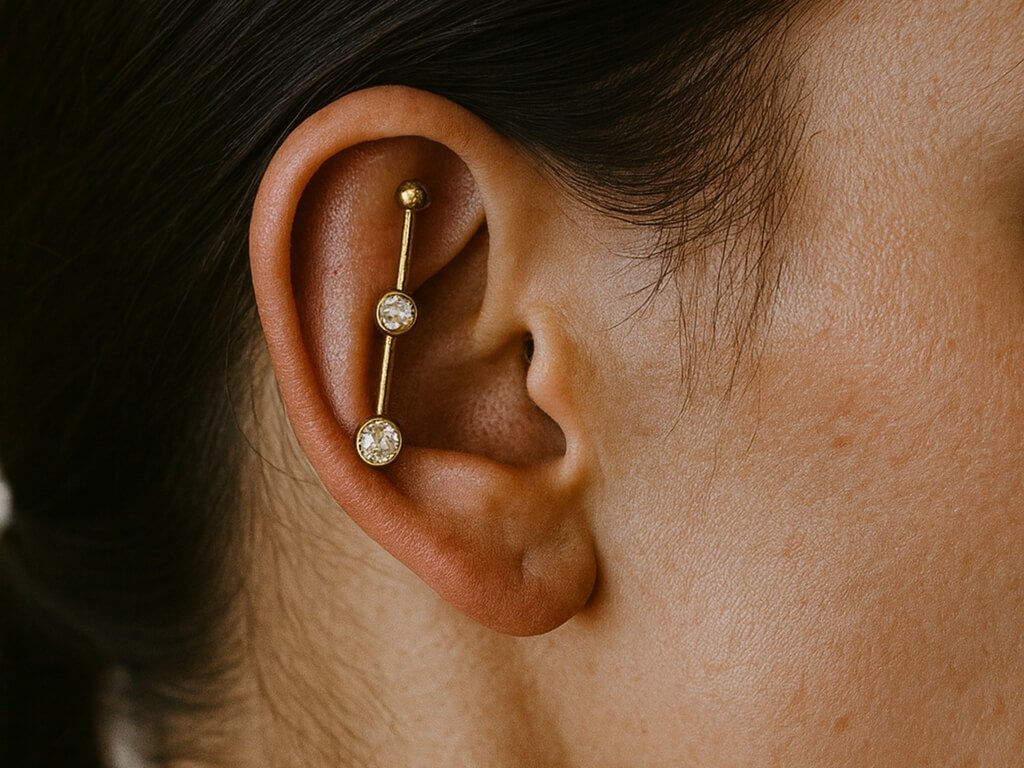
The vertical helix piercing is done vertically through the helix. The helix is the outer ridge or rim on the top of your ear. It extends down into the forward helix area. This is the tissue that traditional industrial piercings go through.
Vertical Helix Piercing Anatomy
The helix itself needs to be pronounced enough to support the jewelry and the piercing. If your helix is very flat or not pronounced, you are not a good candidate for vertical helix piercing. The tissue can reject or migrate out if there’s not enough support.
These piercings are sometimes done in groupings. Your anatomy dictates where you place them and how many you can do. The thickness and supportiveness of the tissue determines the placement. It should be done to fit your anatomy and look like it belongs there.
Vertical Helix Piercing Healing Time
How long does a vertical helix piercing take to heal? Vertical helix piercing healing time is anywhere from 8 to 12 weeks. However, some people experience healing closer to 3 to 6 months. Healing time varies greatly from person to person. It depends on how well you can isolate this piercing during the healing process.
Vertical Helix Piercing Aftercare
Daily Cleaning Routine
During the healing process, clean twice daily using sterile saline solution. Neil Med’s piercing aftercare is a reliable option. You can find substitutes if needed.
When looking for sterile saline, check these requirements:
- It should say “sterile” on the label
- It should be in a pressurized can
- The only ingredients should be sodium chloride and distilled water
- If it has anything else, that’s not what you want
The only other cleaning method recommended is rinsing under running water at the end of your shower. Pull your hair out of the way. Let the water flow over the piercing. This helps ensure soap and shampoo don’t collect on it. It also helps break down discharge and remove it from the jewelry.
Preventing Cross-Contamination
Use common sense: wash your hands before you handle the vertical helix piercing.
Avoid these contamination sources:
- No oral contact
- No exchange of bodily fluids
- Keep your environment clean (clothing, bedding, towels)
- Do not submerge the piercing in bodies of water you cannot control
- Everything except your own clean bathtub is off-limits
- No lakes, no swimming pools
Keeping Pets Away
Keep pets away from the piercing. Don’t let them sleep in bed with you, especially small ones that sit by your face.
Avoiding Contact with Unclean Objects
Common culprits include telephones, headphones, hats, scarves, and headbands. Anything that comes in contact with the area could contaminate the piercing.
Avoid contact with wet hair. Wear your hair up in a bun until it’s completely dry. Don’t let it drip dry against the piercing.
Avoiding Trauma, Abuse, and Pressure
Do not abuse your piercing. What we’re discussing here is protecting it from damage.
How to Sleep with a Vertical Helix Piercing
Sleeping Position Matters
Do not sleep on the vertical helix piercing. Sleep on your other side or your back. Figure out a way to elevate it off the bed. The most common method is using a U-shaped travel pillow or a piercing pillow or donut-shaped pillow. Put a clean sock on it every night to keep it sanitary.
Avoiding Pressure Points
Avoid tight-fitting headphones, helmets, hats, scarves, headbands, and bandages. Anything that puts pressure on or bends that area will cause issues. It increases the likelihood of the piercing getting caught and pulled, which hurts.
Do not spin, rotate, or move the vertical helix piercing jewelry. There is no reason to do this, no matter what you were told. This only prolongs the healing period and causes other issues.
Mask-Wearing Precautions
If you wear a mask for work or other reasons, be careful when taking it off and putting it on. If there’s pressure or contact in the back, trade it for ear savers.
Glasses and Safety Equipment
Make sure glasses don’t contact the vertical helix piercing. When you get pierced, bring whatever item you wear to ensure it doesn’t contact your new piercing.
Hair Care Considerations
Because of where the vertical helix is located, hair can easily tangle in it. Pressure is applied when you brush your hair, causing it to pull and yank on the piercing. Be cautious to separate your hair before doing anything in the area.
Tell your beautician to stay away from the piercing during hair appointments.
Best Vertical Helix Piercing Jewelry
Straight posts work best for vertical helix piercings. I don’t suggest rings or curved barbells. This piercing needs a straight post—either a labret or barbell. Choose either threaded or threadless options.
Initial Jewelry Will Be Oversized
The initial jewelry will be oversized to allow for swelling. Eventually you’ll need to downsize. More details on that shortly.
During the vertical helix piercing healing process, check threaded ends regularly. Make sure they’re on tight. Avoid ends that easily get caught or snagged on things. If you have a cone sticking out, it will catch on clothing, pillowcases, and everything that contacts it.
When to Downsize Vertical Helix Piercing Jewelry
Because we leave a longer post to allow for inflammation and swelling, downsize as soon as possible. I suggest anywhere from 4 to 6 weeks. Have this professionally done. See your piercer and let them do it.
Piercers have proper tools to ensure the piercing isn’t left empty. They use a guide or taper pin to push out the old jewelry and insert the new piece. At home it’s a struggle, plus you can’t see what you’re doing. Let them handle it.
Why Downsizing Matters
Downsizing helps avoid contact with objects. Longer posts sometimes tip one way or another, causing the vertical helix piercing to migrate in that direction. A shorter, tight-fitting post reduces the likelihood of that issue.
Vertical Helix Piercing Pain
How painful is a vertical helix piercing? This piercing isn’t extremely painful. It’s your average cartilage piercing. It’s a quick poke and a very quick piercing to complete. You’ll experience a sharp pain, then a little heat, then some throbbing that lasts a few minutes.
Every time you touch it for the next couple weeks, it will hurt. It will be tender to the touch for a while.
Things to Consider Before Getting a Vertical Helix Piercing
If you’re going on vacation or you swim frequently, wait until after your vacation. Wait until you’re done swimming for the season.
When you’re on vacation, you’re in a strange environment you can’t control. You’re sometimes more stressed, even though vacations are meant for relaxation. It’s best to wait and postpone the vertical helix piercing until you return.
Most hotels and motels have pools, or you’re going somewhere with swimming opportunities. Enjoy your vacation first, then deal with the vertical helix piercing.
Organized Activities and Competitions
If you’re involved in organized activities, competitions, or drama that require removing jewelry to perform, piercings don’t do well with this. Taking it out and putting it back in repeatedly, especially during healing, causes problems.
If you’ll need to remove the vertical helix piercing jewelry regularly, postpone the piercing until you’re done with those activities. If you’re unsure, talk to the person in charge. Don’t assume there’s no dress code—there usually is one.
Isolating the Piercing Is Critical
Isolating and avoiding sleeping on the vertical helix piercing is a huge part of easy healing. The more you isolate it and keep things away from it, the less likely you’ll have issues.
Placement Affects Future Jewelry Options
The placement and angle of vertical helix piercing dictates what type of jewelry you can wear in the future. Keep that in mind. Discuss your future plans with your piercer if you have any.
Vertical Helix Piercing Tips
- Vertical helix piercing healing time typically ranges from 8-12 weeks, but can extend to 3-6 months
- Clean twice daily with sterile saline solution and rinse under running water
- Avoid sleeping on the piercing—use a travel pillow to elevate it
- Downsize jewelry at 4-6 weeks to prevent migration
- Pain level is moderate—expect tenderness for several weeks
- Ensure your helix anatomy is pronounced enough to support the piercing
- Use straight posts only (labret or barbell), not rings or curved barbells
- Be cautious with hair care, masks, glasses, and headphones during healing