


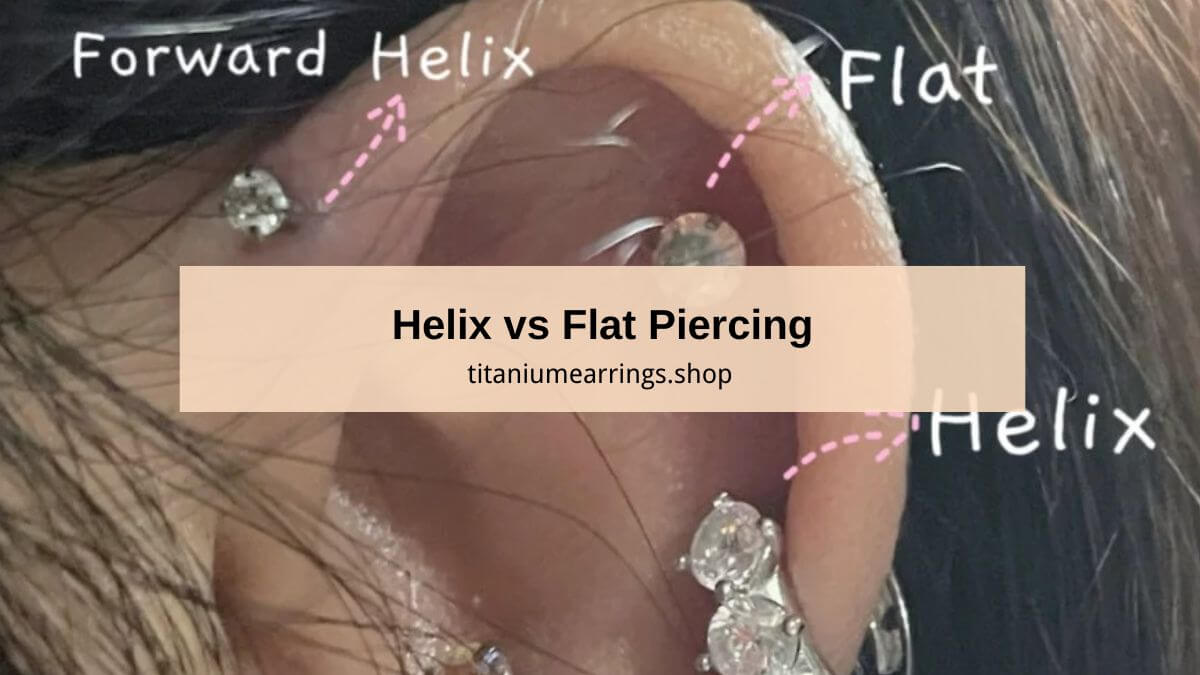
In this article, we compare two popular ear cartilage piercings: Helix vs flat piercing. This guide will help you understand the key differences between helix piercings and flat piercings so you can make the best choice for your ear anatomy and lifestyle.
What Is a Helix Piercing?
The helix piercing is done anywhere along the outer rim of the upper ear. This cartilage ridge starts at the top of the ear and curves all the way down. Helix piercings are typically placed as far out on the ridge as possible.
Before we started calling them helix piercings a couple of years ago, everyone referred to them as upper ear cartilage piercings.
What Is a Flat Piercing?
Flat piercings are done in the flat area of the upper ear, typically anywhere in the broad cartilage surface. Some specific flat piercing placements have their own names, like the faux rook and the Snakebites piercing, but they’re essentially variations of flat piercings in different locations within this area.
Helix vs Flat Piercing: Anatomy Considerations
Helix Piercing Anatomy
When comparing helix vs flat piercing anatomy, most people have suitable ear shapes for a helix piercing. The main variable is how folded or turned over the outer rim is and how deep it sits. This can affect placement options, which we’ll discuss later.
The only real anatomical limitations occur if:
- The helix ridge is very pronounced or large, which may limit ring size options that fit comfortably
- The area is folded very tightly, making the jewelry difficult to see
Generally, if we adjust the placement, helix piercings can be done on most people.
Flat Piercing Anatomy
Most people have a flat area suitable for piercing. The primary consideration is whether the flat area is truly flat or more like a folded hill. A folded surface can limit placement options and dictate the size of jewelry that works comfortably.
Winner: Helix (slightly more universal anatomy)
Helix vs Flat Piercing: Placement Flexibility
Helix Piercing Placement
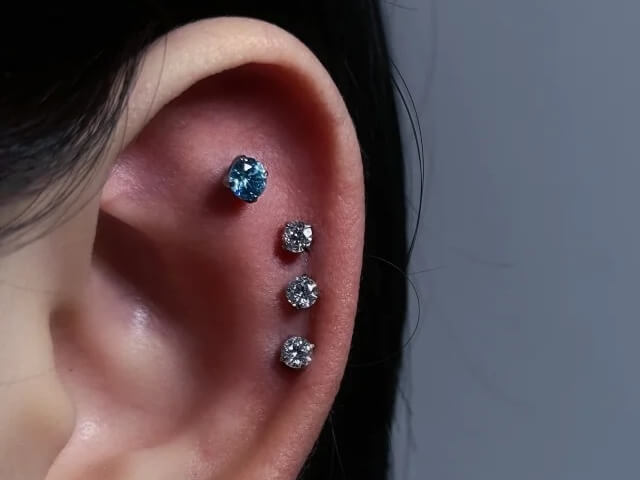
If you’re planning to wear a hoop in your helix piercing, placement matters significantly. You want the piercing as far out on the ridge as possible, close to the outer edge. Placing it too far inward can interfere with wearing rings comfortably.
Helix piercings are limited to following the curved line of the ridge. Some areas lower on the helix can be more problematic due to their location, but generally, placement options follow that outer edge.
Flat Piercing Placement
In the helix vs flat piercing debate, the flat area offers significantly more placement flexibility. You have a large surface area to work with, allowing various placement options. Some placements have different names, but the key advantage is freedom to position the piercing in multiple locations across the flat surface.
Unlike helix piercings that must follow the ridge line, flat piercings can be placed creatively throughout the entire flat area.
Winner: Flat (more placement options)
Helix Piercing vs Flat: Healing Process and Challenges
Helix Piercing Healing
When it comes to helix vs flat piercing healing, helix piercings typically have a longer healing period. Because the helix sits on the outer edge of the ear, it experiences more contact with:
- Glasses
- Hair getting caught
- Hats
- Bedding while sleeping
- Doorways and other obstacles
This outer location makes helix piercings harder to isolate during healing. They’re more prone to irritation bumps and “grumpy periods” due to frequent contact. The jewelry must be downsized during the healing process to prevent complications.
Flat Piercing Healing
Flat piercings usually heal slightly faster than helix piercings, though this varies from person to person. The inner position makes them somewhat easier to isolate because they don’t receive as much contact as the outer ear.
However, flat piercings still require care:
- You must avoid contact with glasses and hair
- The back of the jewelry can interfere with sunglasses or regular glasses
- These piercings are less prone to irritation bumps than helix piercings
Timely downsizing is crucial for flat piercings. Both helix and flat piercings can migrate or angle out during healing, especially if you don’t downsize. Shorter jewelry makes isolation easier with less movement and limits the possibility of your body shifting the piercing out of alignment.
Winner: Flat (easier healing process)
Flat Piercing vs Helix: Jewelry Options and Styles
Helix Piercing Jewelry
In terms of helix vs flat piercing jewelry styles, helix piercings offer diverse jewelry options. With post-style jewelry, you can wear many different decorative ends. The size of gem clusters may be limited depending on your anatomy.
The major advantage: you can usually wear hoops or rings in helix piercings if they’re placed correctly and your anatomy supports it.
Flat Piercing Jewelry
Flat piercings allow you to wear very large, detailed gem clusters and elaborate decorative ends. The flat surface provides stable support for statement pieces.
The limitation: you cannot wear rings in flat piercings. You’re restricted to post-style jewelry only.
Winner: Helix (ring options provide more versatility)
Helix vs Flat Piercing: Living with the Piercing Long-Term
Helix Piercing Long-Term
Helix piercings can be difficult to isolate, especially with a ring. They’re prone to occasional problems even years after healing. The piercing might become sore if you sleep on it wrong or if it gets bumped.
Personal experience: I’ve had my helix piercing for nearly 30 years. Every once in a while, if it gets bumped just right, it’s sore for a couple of days. It’s just one of those piercings.
You may never be able to sleep on a helix piercing completely throughout the entire night. If you’re a dedicated side sleeper, consider this limitation carefully.
Flat Piercing Long-Term
Flat piercings are easier to isolate because they sit more inside the ear and don’t contact things as readily. They can still be subject to occasional irritation due to their location.
The advantage: you might eventually be able to sleep comfortably on a flat piercing, something that’s less likely with a helix piercing.
Winner: Flat (easier to live with long-term)
Quick Recap: Helix vs Flat Piercing
- Anatomy: Most people can get either piercing, but helix has slightly more universal anatomy
- Placement: Flat piercings offer more flexibility across the ear surface
- Healing: Flat piercings typically heal faster and encounter fewer complications
- Jewelry: Helix piercings allow ring options; flat piercings support larger decorative ends
- Long-term: Flat piercings are generally easier to live with and may allow comfortable sleeping
Final Decision
There isn’t a huge difference between these two cartilage piercings. The choice really comes down to your style preferences and what you’re looking for in a piercing. Both have their advantages and challenges.
The best approach: talk to your piercer, have them assess your ear anatomy, and determine what will work best for you. Your piercer can recommend placement options based on your lifestyle, sleeping habits, and jewelry preferences.