


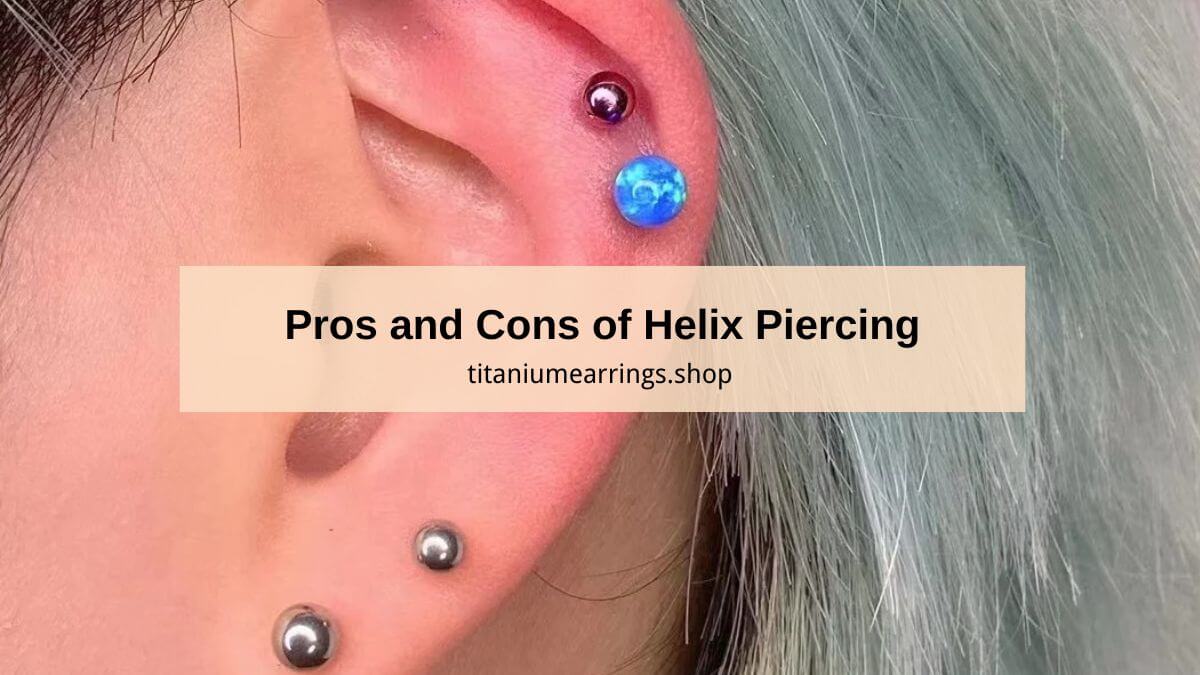
When considering a helix piercing, understanding the pros and cons of helix piercing is crucial for making an informed decision. This comprehensive guide from a professional piercer covers everything you need to know about helix piercings, from anatomy requirements to aftercare protocols.
What Is a Helix Piercing?
Before diving into the pros and cons of helix piercing, let’s clarify what this piercing actually is.
Defining the Helix: The Raised Ridge of Your Ear
There’s significant confusion about what constitutes a helix piercing. Many people incorrectly call all upper ear cartilage piercings “helix piercings.” However, the helix specifically refers to the raised ridge of cartilage that runs around the outer edge of your ear.
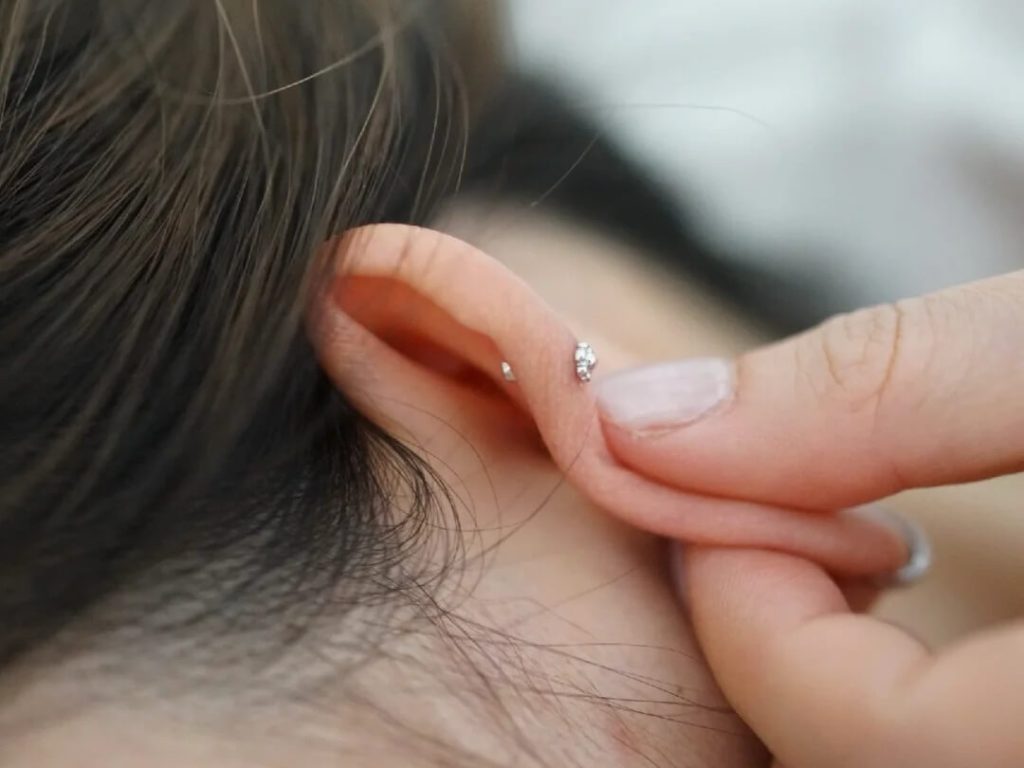
Think of it this way: calling all upper ear cartilage piercings “helix” would be like saying the legs are the top of the table instead of the tabletop being separate from the legs. The helix is a specific anatomical structure.
A true helix piercing goes through this ridge at an angle, straight through the cartilage and surrounding tissue. The piercing can be placed at various angles on the ear, depending on your anatomy. It can be done in the front underneath the flap, projecting forward.
You can also do it at different angles around the ear if your anatomy allows it.
Helix Piercing vs Other Cartilage Piercings
Not all upper ear cartilage piercings are helix piercings. The distinction matters for proper placement and healing expectations. The helix refers specifically to that outer rim of raised cartilage and tissue.
Forward helix piercings sit in the area underneath the flap of tissue, with the ring hanging down over that section. These are commonly done as part of helix-to-helix industrials.
For those unfamiliar with industrials, they consist of two piercings connected by a single barbell. The most common configuration goes from the back helix to the forward helix area underneath that flap, or slightly above it depending on the person’s anatomy.
Pros of Helix Piercing
Quick Helix Piercing Healing Time
Helix piercings typically heal in approximately 8 to 12 weeks. This is not a long healing period compared to other cartilage piercings, making it one of the notable pros in the pros and cons of helix piercing discussion.
While it can be somewhat challenging at times, like any cartilage piercing can be, the healing timeline is relatively manageable and shorter than many other cartilage piercing locations.
Alternative to Standard Cartilage Piercings
When weighing the pros and cons of helix piercing, this piercing offers a nice alternative to regular upper ear cartilage piercings. It’s not a very widely done piercing, except when done as part of the process of creating helix-to-helix industrials.
You don’t see many standalone helix piercings, especially in the front placement where the ring hangs down over that flap of tissue where the forward helix is typically done through.
Versatile Helix Piercing Jewelry Options
Another advantage in the pros and cons of helix piercing is jewelry versatility. Helix piercings can accommodate a variety of jewelry types. You can wear rings, studs, or barbells in this piercing. The jewelry options are broader than some other piercing types because you’re not specifically stuck with just one particular style of jewelry.
Usually a ring is preferable if you’re doing the front placement. You can also do it with small barbells. You can use labret studs as well. After the piercing heals, you can line your ear with multiple pieces following the natural curve, creating an attractive decorative effect along the helix ridge.
Natural Placement Following Ear Curvature
When done correctly with proper placement, helix piercings can follow the natural smooth curvature of your ear. This creates a crowning effect or an almost directional, compass-like arrangement around the ear.
The placements must be done correctly to achieve this effect. You also need the proper anatomy—specifically, the ridge must be pronounced enough to support multiple piercings if that’s your goal.
Well-Tested Piercing Since 1994
This is a well-tested piercing with a long track record. Professional piercers have been performing helix piercings consistently since 1994, more often than not, especially in the process of doing helix-to-helix industrials. The technique is established and has been refined over decades of professional practice.
Cons of Helix Piercing
Contact with Objects During Healing
Like any ear piercing located on the edge of the ear, helix piercings come into contact with numerous objects throughout daily life. Clothing, bedding, towels, telephones, headphones, helmets, and safety gear all pose potential risks for irritation or infection.
When considering the pros and cons of helix piercing, contact with objects is a major concern. During the healing process, it’s very important that the helix piercing is isolated and that these items are kept away from it as much as possible. This constant potential for contact makes helix piercings more challenging than some other piercing locations.
Can Be Difficult to Heal
In evaluating the pros and cons of helix piercing, healing difficulty is an important factor. Helix piercing can be difficult to heal, just like any cartilage piercing.
Cartilage piercings in general tend to be grumpy for longer periods than other types of piercings. They require more careful isolation and protection from contact than many other piercing types. This extended grumpy period means you need to be more vigilant about aftercare for a longer duration.
Requires Correct Anatomy
A critical point in the pros and cons of helix piercing is anatomy. You really need the correct anatomy to have this particular piercing done successfully. If the ridge isn’t pronounced enough, then the piercing can’t be done properly. The helix piercing needs to go through both the cartilage and the fatty tissue that’s above it or around it at the correct angle.
One of the biggest mistakes commonly seen, especially with industrials, is setting the piercing through the cartilage at the correct angle, but then the tissue rolls off to the side. This leaves only that fatty tissue, and the jewelry subsequently pushes out, migrates, or gets rejected from the piercing.
You really have to have that pronounced ridge with enough structural support there to accommodate the piercing correctly.
Grumpy Stages Even After Healing
Most cartilage piercings, especially because of their location and the amount of contact they get with various objects, tend to experience grumpy stages. These can occur even years after the piercing is completely healed.
For a couple of days, or maybe just a day or two, the piercing may become irritated seemingly out of nowhere. This can happen because you slept on it wrong, wore clothing that was too restrictive in that area, or experienced some other form of minor trauma to the piercing site.
Extensive Aftercare Requirements
One of the most demanding aspects when examining the pros and cons of helix piercing is aftercare.
How long does a helix piercing take to heal? The helix healing process averages around 8 to 12 weeks. During this entire time, proper aftercare is absolutely essential for successful healing. The aftercare routine includes performing hot soaks or warm compresses with warm water and sea salt twice daily into the piercing.
You need to clean it with an antimicrobial germicidal soap once or twice a day, or whenever it becomes contaminated. In other words, if you make a mistake and the helix piercing comes into contact with something unclean, do a second cleaning just to be on the safe side.
Additional requirements include avoiding contact with the piercing or exchanging bodily fluids on, near, or around the piercing area. You must keep your environment clean, including all clothing, bedding, and towels—anything that may come in contact with the piercing must be freshly laundered.
Don’t submerge the helix piercing in bodies of water where you can’t control the water quality. This means everything except your own clean bathtub should be avoided. Keep pets away from the piercing area. Don’t let them sleep in the bed with you during the healing period.
Avoid contact with unclean objects. No object is more problematic than telephones, especially smartphones or phones that have glass covers on the front. These devices come into contact with everything in your environment, and then you touch them repeatedly. This tends to create a perfect storm of a petri dish full of foreign pathogens. You need to keep that phone completely away from the piercing.
You should also be concerned about any clothing items like hats, headbands, or anything else that may come in contact with the piercing. Glasses and sunglasses need to be cleaned on a regular basis. The same applies to helmets or any type of sports-related, professional, or hobby-type gear that you may have to wear for protection.
How Long Does a Helix Piercing Take to Heal?
How long does it take helix piercing to heal? This is a common question when researching the pros and cons of helix piercing. The healing time for helix piercings is typically 8 to 12 weeks when you follow proper aftercare protocols and successfully avoid complications.
However, it’s important to understand that full maturity of the piercing channel may take several additional months to a year beyond the initial healing period.
How to Clean a Helix Piercing
How to clean your helix piercing? Clean your helix piercing twice daily using warm water and sea salt soaks or warm compresses. Mix sea salt with warm water and apply the solution as a compress to the piercing area.
Additionally, clean the piercing with an antimicrobial germicidal soap once or twice daily, depending on your activity level and exposure to contaminants.
If the helix piercing becomes contaminated at any point—meaning it comes into contact with unclean objects or substances—perform an additional cleaning immediately, regardless of whether you’ve already cleaned it that day.
Can You Sleep on a Helix Piercing?
Can you sleep with a helix piercing? Sleep position is a frequent concern in the pros and cons of helix piercing. Avoid sleeping on the piercing at all costs. Try to sleep on the other side of your body, on your back, or figure out a way to elevate the jewelry and piercing area off the bed surface.
The cost of constantly moving during sleep and the abuse that happens when you lean on piercings and sleep on them tends to cause problems. These problems are very hard to get rid of once they start developing.
Avoid Pressure and Jewelry Removal During Healing
Don’t use headphones, helmets, earmuffs, or any noise-cancelling equipment on the pierced ear during the healing period. If you’re involved in any type of sport activity or competitive hobby that will require you to remove the jewelry, this is a piercing that you may want to consider not doing.
Unless you’re going to have 2 or 3 years where it’s not going to be an issue, constantly removing the jewelry and putting the jewelry back in will cause issues. These issues include the piercing completely closing or possibly leading to an infection.
This is really a piercing that once you do it, the jewelry needs to stay in. It should only be taken out to be replaced with different jewelry for at least the first couple of years. Even after that initial period, every time you remove the jewelry for any length of time, you’re risking closure of the piercing channel.
The other important consideration is if you have to wear any type of headgear for whatever hobby or professional activity you participate in—helmets, earmuffs, anything that may be constricted or put a lot of pressure on the piercing area—don’t get the piercing done until you’re finished with that activity. The constant pressure and contact will prevent proper healing and cause chronic irritation.
Quick Helix Piercing Tips
Before getting a helix piercing, review this summary of the pros and cons of helix piercing and consider these key points for success:
- Expect an 8 to 12 week healing period with diligent proper care and aftercare compliance
- Your ear anatomy must feature a pronounced ridge to adequately support the piercing
- Jewelry options include rings, studs, and barbells once the piercing has fully healed
- All contact with clothing, phones, headphones, and helmets must be strictly avoided during healing
- Sleep exclusively on the opposite side or find a method to elevate the piercing off the bed
- Clean twice daily with sea salt soaks and antimicrobial germicidal soap without exception
- Keep the jewelry in place continuously for at least 2 years—removal risks complete closure
- The piercing may experience grumpy periods and minor irritation even after complete healing
- Forward helix placements work exceptionally well for unique aesthetic looks and arrangements
- Professional piercers with experience dating back to 1994 have refined and perfected the technique
Other than these considerations, if you take care of your helix piercing properly, have the correct anatomy, and successfully keep objects and contaminants away from it, it can be a fairly decent, easy, and relatively quick healing experience compared to some other cartilage piercing options.
Conclusion on Pros and Cons of Helix Piercing
Understanding the pros and cons of helix piercing helps you make an informed decision. The advantages include a relatively quick 8 to 12 week healing time, versatile jewelry options, and a well-established technique.
However, the challenges require consideration: potential contact with objects, grumpy healing stages, and strict aftercare requirements. By carefully weighing the pros and cons of helix piercing outlined in this guide, you can determine if this piercing is right for you.
Learn more:
is helix piercing dangerous
How to do Helix Piercing— Safe Technique and Aftercare Tips