


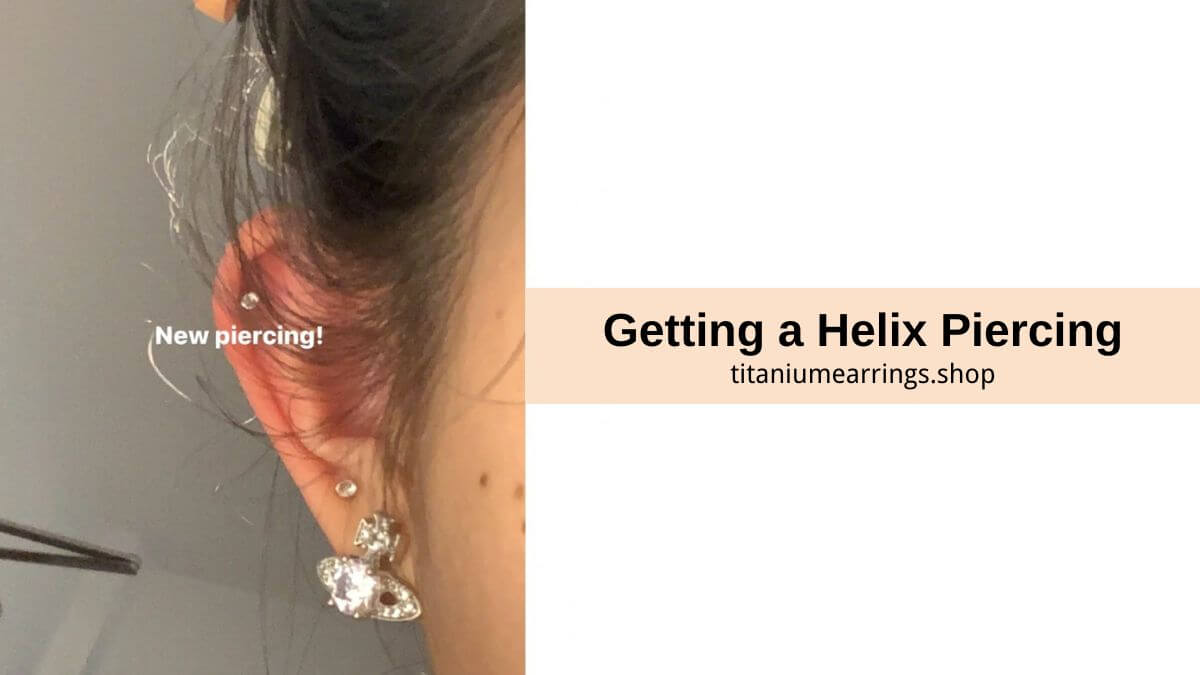
Getting a helix piercing was one of those decisions I both wanted and feared for years. As someone who is extremely terrified of needles, the idea of voluntarily getting a helix piercing seemed impossible. But I finally did it, and I want to share my complete helix piercing experience with you—from overcoming my needle phobia to the healing process and everything in between.
Why I Decided to Get My Helix Piercing
I had wanted my helix piercing done for years, but I was always too scared to actually go through with getting a helix piercing. The helix piercing is a type of cartilage piercing on your upper ear, and I loved how it looked whenever I saw it on others. I already had my two lobe piercings done back in grade six, but a cartilage piercing felt like a much bigger step.
The decision finally came when I was sitting in a pizza shop with my friends. They mentioned wanting to get piercings done at a tattoo shop the next day, and I spontaneously said I was down to go. It was near the end of summer, and I thought, “Whatever, I’ll just go get it done. YOLO.” I made my friends promise to make sure I actually went through with it, because I knew I might chicken out otherwise.
Overcoming My Fear of Needles
I need to be completely honest here: I am extremely, extremely terrified of needles. I go into a panic attack as soon as a needle is mentioned and I have to get one. Everyone who knows me knows this about me. We’re not tight, needles and I—we’re not like that at all.
This fear is exactly why getting a helix piercing was such a big deal for me. My close friends knew how much I hated needles, which made my decision to get the helix piercing even more significant. But I really wanted it done, and I was determined to push through my fear.
The Helix Piercing Process
The morning of my helix piercing appointment, I prepared by drinking water and eating a granola bar so I wouldn’t pass out—getting a helix piercing felt like a huge moment for me. Here’s what happened when I got to the tattoo parlor.
Where to Get Cartilage Piercing: Tattoo Shop vs Piercing Studio
I got my helix piercing done at a tattoo shop. The piercer had me sit in a laid-out chair, which actually helped with the whole not-passing-out thing. I brought a friend with me, which I highly recommend. She knew exactly where I wanted the piercing placed and made sure it was in the proper space on my ear.
She knew exactly where I wanted the piercing placed and made sure it was in the proper space on my ear. For anyone thinking about getting a helix piercing, bringing a friend along really helps calm the nerves.
Helix Piercing Placement: Marking the Spot
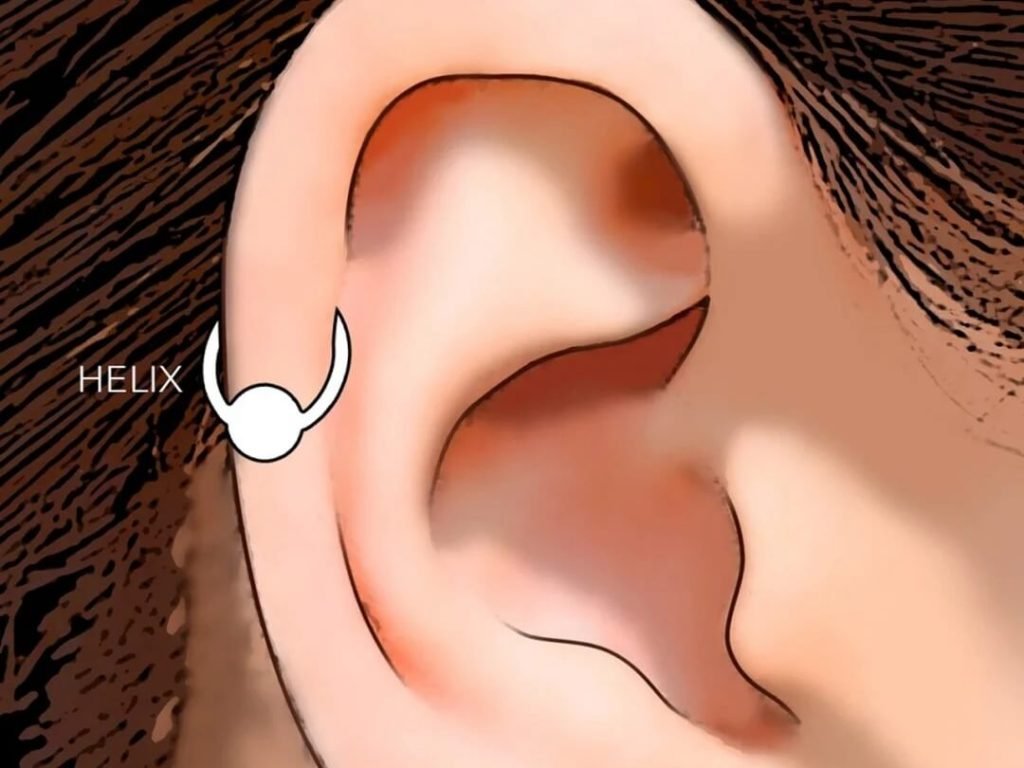
The tattoo guy marks your ear with a pen before piercing. This is super important because sometimes they pierce in the wrong location, and then you’re stuck with a piercing that’s too far down or not in the right spot. He drew the mark once, but we had to tell him to move it a little bit further up. Don’t be afraid to speak up about placement—it’s your ear.
Cartilage Piercing Gun vs Needle
Is Cartilage Piercing with a Gun Safe?
They don’t use guns anymore for cartilage piercings. I know that places like Claire’s pierce your lobes with guns, but they don’t do that for cartilage piercings.
From what I understand, using a gun can cause damage to the cartilage. It can crack it or make it more prone to developing bumps. That’s why professional piercers always recommend getting a helix piercing done with a sterile needle instead. They have to use a needle instead.
Cartilage Piercing with a Needle: What to Expect
The needle goes through your ear first, and then they feed the bar through. The whole process was really quick.
My friends said that the way it looked and sounded was a whole lot more painful than it actually was, and they were really surprised that I went through with it. The piercer has to clamp down your ear to spread it out so they can feed the needle through properly.
Helix Piercing Pain Level: How Much Does It Hurt?
So, how much does a helix piercing hurt? Honestly, getting a helix piercing didn’t hurt that much during the actual process.It was way less painful than I expected.
The guy tried to mess with me by saying, “Oh my God, there’s so much blood!” I freaked out for a second, but then he laughed and said he was just kidding. Not really appreciated, but whatever.
The real discomfort came after. It does hurt for a while, even now when I filmed the original footage. It used to be really sensitive to touch. Now it doesn’t hurt to touch anymore, but it took several months to get to that point. It’s still kind of sensitive when I lay on it, but it’s way better than it was before.
After I got up from the chair, I felt really lightheaded and panicky. I had to sit down on the couch because I couldn’t breathe properly and got dizzy. But that was just me and my needle anxiety—the actual piercing itself was quick and not as bad as I thought it would be.
Helix Piercing Healing Process and Aftercare
How to care for a helix piercing? Understanding the healing process for cartilage piercings and knowing how to care for your helix piercing properly are crucial for avoiding complications.
Helix Piercing Healing Stages
The healing stages for helix piercings are pretty long, and if you’re getting a helix piercing for the first time, patience is everything—it’s a slow but rewarding process.
I’ve heard that it takes around a year to fully heal, but you can switch out your piercing after 2 to 3 months. I got mine done at the end of August, and by the end of November, I ordered a new piercing—an arrow-style ear piercing from titaniumearrings.shop—to switch it out.
The initial stud they put in helps with the helix healing process. They gave me a straight bar instead of a hoop because hoops don’t adjust well when your ear swells. There’s enough space in the bar that it can accommodate the swelling, and I can just shift the bar back and forth in my ear. They didn’t ask me if I wanted a hoop or a straight bar—they just gave me the stud automatically.
When Can I Sleep on My Cartilage Piercing?
Sleeping on the piercing was difficult at first. It gets sensitive when you have to sleep on it. It’s still kind of sensitive every so often when I lay on it, but it takes a long time for it to become less sensitive. The sensitivity gradually decreased over several months.
What to Clean a Cartilage Piercing With?
I had to clean my cartilagepiercing with a mixture of sea salt and warm water. The best way I found to clean it was to put the mixture in a little Dixie cup and hold it up to my ear. This sea salt soak method was the most effective cleaning technique for me.
I haven’t had any real problems with infection so far. As long as you’re careful about cleaning it regularly and not touching it unnecessarily, you should be fine. If you’re generally okay with piercings, the aftercare is going to be no big deal.
When Should I Downsize My Forward Helix Piercing?
You can change your helix piercing jewelry after 2 to 3 months of healing. I didn’t ask what gauge my piercing was when I got it done, but I Googled around and found that the majority of helix piercings are 16 gauge. Regular lobe piercings are about 18 gauge, just so you know.
I ordered my new piercing from titaniumearrings.shop—it’s an arrow cartilage piercing, one of those cute ones you see on Tumblr. If you search “arrow cartilage piercing” , you’ll find similar options. I’ve switched to the arrow style now, and I love how it looks.
Quick Recap: Helix Piercing Tips
Overall, getting a helix piercing was one of the most rewarding things I’ve done—it taught me patience, care, and courage.
- Expect mild to moderate anxiety if you have a fear of needles, but the actual piercing is quick
- The pain during piercing is less than you’d expect, but sensitivity continues for months
- Bring a friend to help confirm proper placement before the piercer marks your ear
- Helix piercings use needles, not guns, to prevent cartilage damage
- Initial stud jewelry accommodates swelling better than hoops
- Healing time is typically around 1 year, but you can change jewelry after 2-3 months
- Clean with sea salt soaks held in a small cup against your ear
- Sleeping on the pierced ear will be uncomfortable for several months
- The piercing is usually 16 gauge compared to 18 gauge for regular lobe piercings