


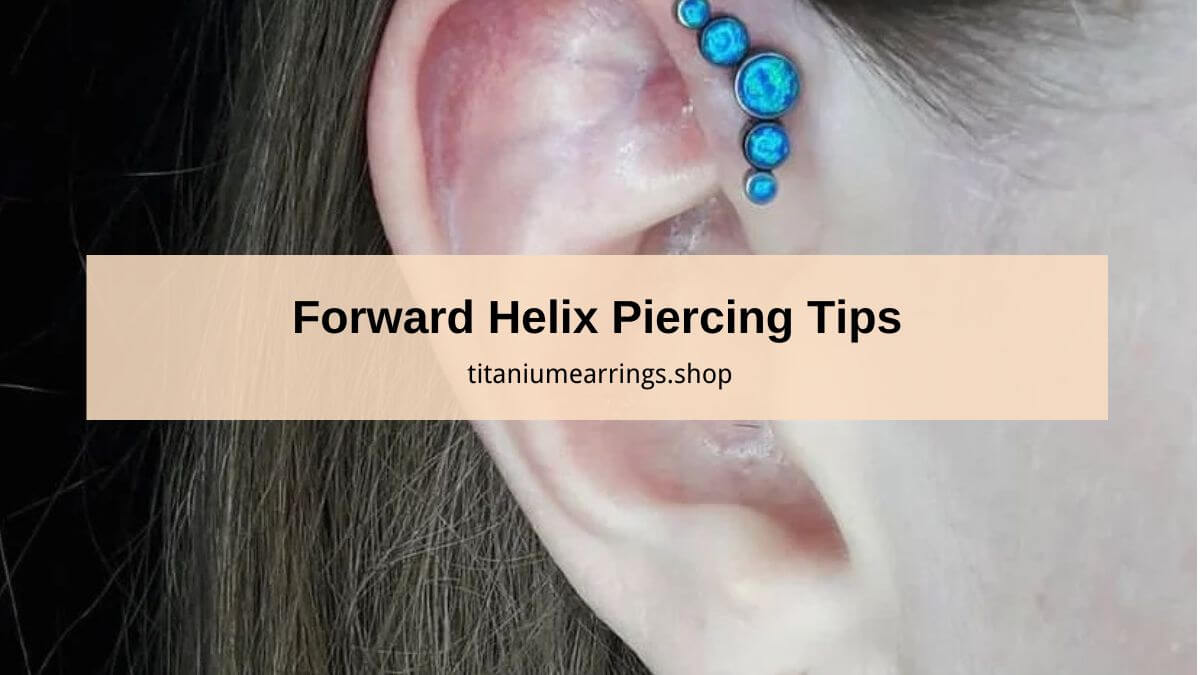
Thinking about a forward helix piercing? Discover healing times, cleaning tips, jewelry advice, and everything you need for a smooth recovery.
Where Is the Forward Helix Piercing?
A forward helix piercing sits on the flap of tissue at the front of your ear, in the ridge area above your ear canal. These piercings go straight through that front ridge, which is why they’re called forward helix piercings—as opposed to the rear helix or upper helix.
These are usually done in groupings, but it really depends on your anatomy.
How Long Does a Forward Helix Piercing Take to Heal?
The healing time for forward helix piercings can range anywhere from 8 to 12 weeks if you’re lucky, up to 6 months or longer. It varies from person to person.
Cleaning and Saline Care
How to clean forward helix piercing?
During that time, you need to clean twice daily using sterile saline solution. When you’re looking for saline, here’s what you want to look for.
Choosing the Right Saline Solution
First off, it should say “sterile” on the can. Second, it should be in a pressurized can, not a bottle that you unscrew (unless it’s medical grade with an expiration date—that’s a different thing). When you look on the back at the ingredients, it should only say two things: sodium chloride and distilled water. Nothing else.
How to Rinse Properly
You also need to rinse it at the end of your shower. Just pull your hair and everything out of the way and let that water flow over the area for about 30 seconds. This is going to help eliminate some of the discharge, and it’s also going to help rinse off any soap or anything that’s collected on the jewelry.
Hygiene and Safety Precautions
Cross-Contamination Prevention
Wash your hands before you handle it. No oral contact or bodily fluids on or near the piercing until it heals.
Keep your environment clean—that’s including clothing, bedding, towels. Anything that comes in contact with forward helix piercing needs to be changed and cleaned on a regular basis.
Don’t Submerge the Piercing
Do not submerge the forward helix piercing in bodies of water you cannot control the quality of—which is everything but your own clean bathtub. That means no swimming until it’s healed.
The reality is that every body of water contains microorganisms or chemicals. These can easily cause problems for your piercing, including the ocean. It’s not the same thing as saline—there’s a lot more salt in the ocean than there is in saline.
Keep Pets Away from Fresh Piercings
Keep those pets away. Don’t let them sleep in bed with you, especially small animals that are attracted to shiny objects and like to sleep up by your face.
Avoid Contact with Unclean Objects
Avoid contact with unclean objects—telephones, headphones, sunglasses. Anything that comes in contact with that area. Always picture roughly about an inch outward from each piercing. Anything that comes in contact with that area needs to be cleaned and disinfected regularly.
Avoid contact with wet hair. So wear that hair up in a bun or one of those towels until it’s completely dry.
Avoiding Trauma, Pressure, and Abuse
These are three things you need to avoid.
Don’t Sleep on the Forward Helix Piercing
Do not sleep on the forward helix piercing. Make sure you’re sleeping on your other side or your back. Or figure out a way to elevate it off the bed.
The most common way or easiest way to do that is to take one of those U-shaped travel pillows, put a clean sock on it, and then sleep with your ear in the center of that hole. Some people use donut pillows or hemorrhoid pillows.
The biggest thing is you don’t want to have that constant movement and pressure that you have when you’re sleeping on forward helix piercing—moving that jewelry, bending it, and doing everything else. All those things lead to problems.
Avoid Tight-Fitting Objects
Avoid tight-fitting objects—things like earmuffs, over-the-ear headphones, helmets. Anything that’s going to put a lot of pressure or hurts to put on, you shouldn’t do it until after the forward helix piercing is completely healed.
Glasses can sometimes affect it, depending on where they’re positioned and where the positioning of the piercing is.
Also, if you wear masks for work or because of health concerns, make sure that when you take them off, they’re not hooked on it. These aren’t affected as much as, let’s say, an upper ear cartilage or helix piercing, where there’s a lot more contact with it.
But if you notice discomfort or it seems like it’s always getting caught on it, try some other alternatives, including the ear savers in the back or maybe the type of mask that doesn’t wrap around your ears—the one that has just one loop.
Hair Considerations
The second thing about hair: because of the location and because everybody grows out this area, it’s usually more curly, wiry hair. People refer to it as angel hair or whatever.
These hairs tend to wrap their way around that jewelry. Then you go to brush and you’ll yank it out or you’ll catch it. So be very cautious. Make sure that there’s nothing wrapped around, and none of the hairs work their way into the piercing area around the jewelry.
Also, make your beautician fully aware that you have a healing piercing and please stay away from it.
Forward Helix Piercing Pain
This piercing can be a little bit on the painful side, and partly because we’re working in this very tight area. Sometimes the only way it can be done is to do a two-push piercing, where it’s one push to correct the position and then a second one to finish it into a needle receiving tube. Then the jewelry is pushed in from the back.
So there’s a lot of flexing and moving around and working in that tight area that can be very uncomfortable. Immediately afterwards, you’ll have a little bit of throbbing, aching, and heat. Usually that lasts a few minutes, and then it’s going to be very tender to the touch. That’s a way of you learning to avoid the area.
Best Jewelry for Forward Helix Piercings
Initial Jewelry: Flatback Labret Studs
The type of jewelry used on a forward helix piercing is generally flatback labret studs. These are probably the easiest for this piercing because you don’t really have a lot of room behind there.
Threadless or threaded—threadless is my preference, but that changes from piercer to piercer. Threaded jewelry is perfectly fine. The only difference is you’ve got to check the balls on a regular basis, or the ends, and make sure that they’re on there tight.
When it’s pierced, the initial forward helix piercing jewelry is going to be oversized. It will need to be downsized fairly quickly.
Why the Long Posts Look Odd at First
The other thing about this—when I talk about forward helix piercing with clients—is that most commonly on this piercing, you do them, you get done, the person looks in the mirror and they go, “Oh yeah, they’re cool I guess,” because of these long posts.
Well, it’s going to swell, and we’d much rather have it too long than too small. Having that jewelry too small and having that piercing impact can be a very painful and ugly process to go through.
When Should I Downsize My Forward Helix Piercing?
The post is going to need to be downsized anywhere from 4 to 6 weeks. The reason why you don’t want to leave that longer post in is because it’s more likely to get caught on things. And it’s not going to sit perfectly.
Sometimes if it’s sitting at an angle or to the side, it can cause the piercing to migrate out of the original placement. So it’s a good idea to downsize. Go to your piercer, let them do it—they have the proper tools to do it correctly.
The other reason why you want to downsize is to eliminate movement, which will eliminate the possibility of bumps or other problems.
Anatomy Requirements for Forward Helix Piercings
Flat Surface Requirement
As far as anatomy, the anatomy on this needs to be flat—as flat as possible—so the angle can be done properly. The other thing you need to consider is what room is behind it. If you put your index finger in there, you’ll notice it’s a tight spot. There has to be room in there for that jewelry to sit.
If there isn’t, that could be an issue.
Triple Forward Helix: Anatomy Considerations
Also, keep in mind that that area swoops outwards the further you go up, and that can dictate how many of them can be done.
Everybody wants the triple forward helix, but the reality is most people don’t have the anatomy for it. You get up into that far area, and the anatomy dictates what angle it’s at, so it takes that jewelry a little bit out of alignment. If that’s okay with you and you’re fine with that look, that might work. But for most people, it doesn’t work.
Planning for Multiple Piercings
For that reason, one of the things you want to talk to your piercer about—as they’re marking or before they mark or during the consultation—is if you want to do multiple ones possibly, or have that possibility in the future, plan that out.
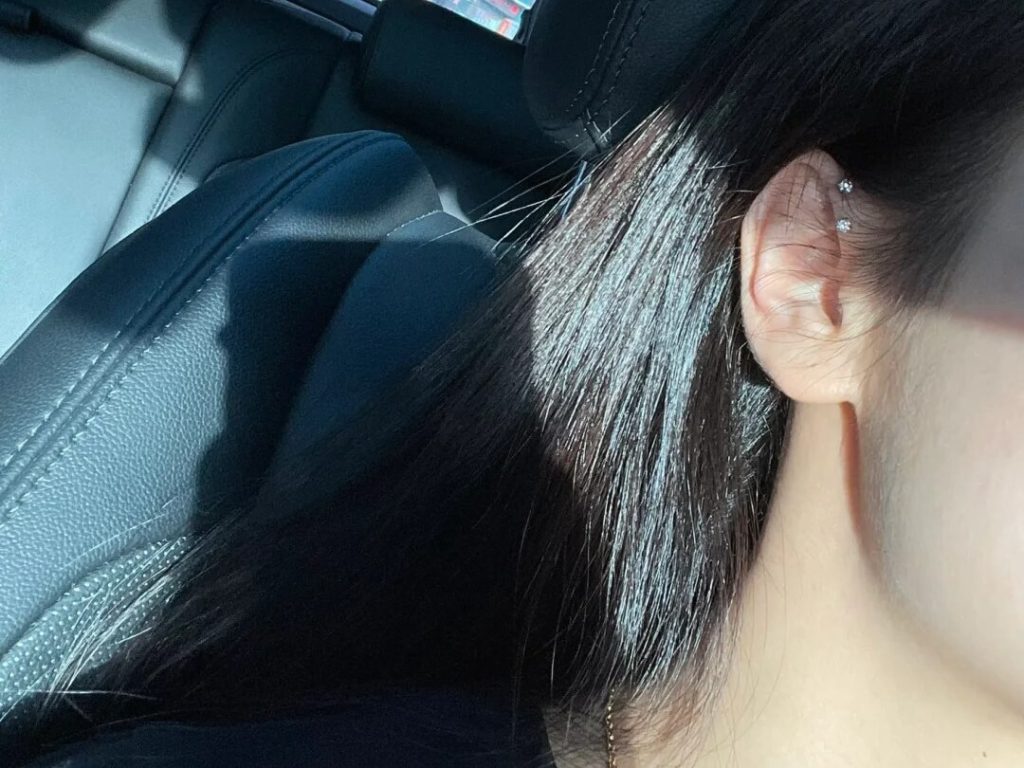
Make sure there’s space for that. Make sure it’s a possibility. Don’t go in there and get one done and then find out six months later, once that’s healed, that you want to add another one and there just isn’t the space or area to do it.
Things to Consider Before Getting Forward Helix Pierced
Vacation and Swimming
Some things to consider: First off, if you’re going on vacation or you swim a lot, you might want to consider waiting or postponing this piercing until you’re at home and no longer on vacation or not swimming.
Vacations can be stressful. Vacations can also involve being in environments that you cannot control, so it makes it very difficult. Plus, everybody goes on vacation—they generally at some point involve swimming. So wait until you get back. You’re just going to have a better experience.
For swimming, it’s usually best to wait until the season’s over or when you’re taking a break from it to get this done.
Organized Sports and Dress Codes
If you’re involved in any type of organized sports—gymnastics, dance, anything that involves a dress code of any type—if you wear a uniform, it’s probably going to be an issue.
You want to talk to the person in charge and ask them whether or not it’s going to be okay for you to have this piercing. You do not want to go through the process of trying to hide the jewelry or hide the piercing, or worst-case scenario, removing and putting it back in all the time.
This is a piercing where it’s not easy to change the jewelry on your own. Even taking it out six months or a year after it’s healed is going to be difficult, and putting it back in is not going to be fun.
So if you’re involved in any of those types of activities that may require that, I really suggest that you possibly postpone it until you’re not involved with it anymore, or definitely check to make sure it’s not an issue.
Sleeping and Contact
Last couple things: sleeping and contact.
I don’t know how to put it more plainly than how important it is during the healing process to be careful when you’re having any contact with the area. You don’t really realize how much you touch areas of your body or how much contact they have until you have a piercing there that’s sore.
Just because it’s no longer sore doesn’t mean that contact is still not going to cause issues. Always avoid sleeping on it.
Placement Considerations for Jewelry
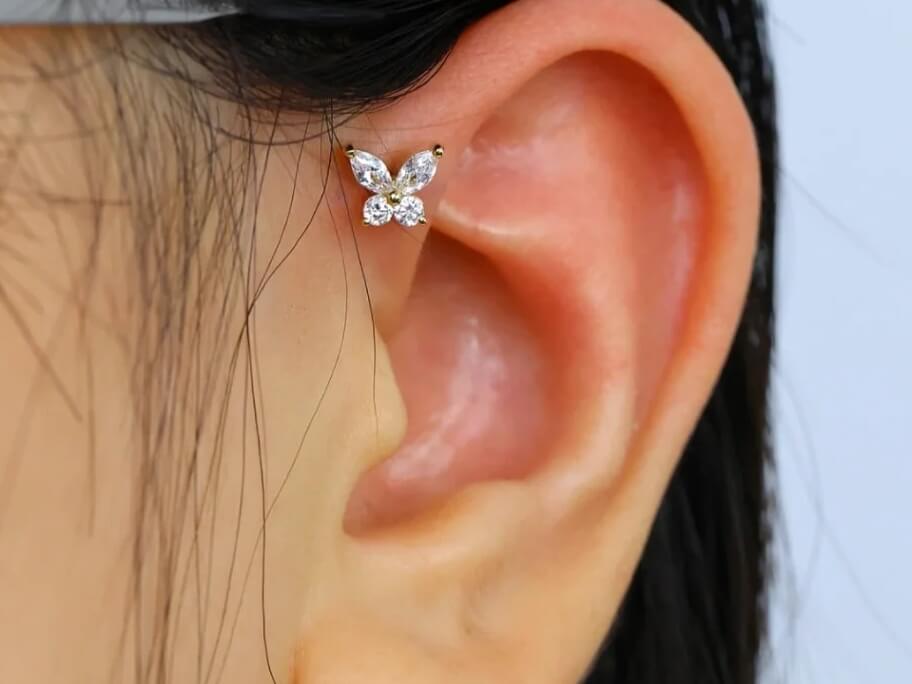
Lastly, the placement of that particular piercing—especially with groupings—is going to dictate what type of jewelry you can wear in it.
If you have some goal or something that you really like, part of your vision—larger pieces, what have you—talk to your piercer at the time of the piercing so they can make adjustments so that that jewelry would sit comfortably there.
Quick Forward Helix Piercing Care Tips
To help you remember the key points:
- Clean twice daily with sterile saline solution (sodium chloride and distilled water only)
- Rinse at the end of your shower for 30 seconds to remove discharge and soap
- Sleep on your other side or use a travel pillow trick to elevate your ear off the bed
- Downsize jewelry at 4-6 weeks to prevent snagging and migration
- Avoid swimming, submerging in water, and contact with wet hair during healing
- Watch for hair wrapping around the jewelry—be cautious when brushing
- Keep masks, headphones, glasses, and tight objects from putting pressure on the piercing
- Plan ahead with your piercer if you want multiple piercings to ensure proper spacing
- Expect 8-12 weeks minimum healing time, possibly up to 6 months or longer
- The biggest thing is you don’t want constant movement and pressure when sleeping on it—all those things lead to problems