



Where Is a Flat Piercing?
A flat piercing is a cartilage piercing located on the upper part of the ear, in the smooth, flat section of cartilage between the helix and the ear canal. If you look in the mirror, you’ll notice a broad flat area in your upper cartilage—that’s exactly where a flat ear piercing sits. This placement has become increasingly popular for its versatility and ability to showcase delicate jewelry.
It occupies the flat cartilage area on the upper portion of the ear. This spot provides enough surface area to accommodate various jewelry styles while remaining relatively comfortable during flat piercing healing.
What Gauge Is a Flat Piercing? From Dermal Punch to Delicate Studs
The flat piercing has evolved dramatically over the past two decades. In the late 90s and early 2000s, piercers performed large-gauge dermal punches or cartilage removals in this area.
They would punch out significant sections of cartilage and insert glass plugs or other large jewelry. This practice originated from the Dayak and Penan tribes in Borneo, who used bull shell casings to create large holes and wore jaguar tusks and teeth.
Today, the flat piercing has transformed into a more delicate modification. Most people now choose smaller 16-gauge or 14-gauge labret studs with gems, stone settings, balls, or flat discs. This shift reflects modern preferences for ornate, subtle jewelry rather than dramatic cartilage removal.
Flat Piercing Jewelry Options and Sizing
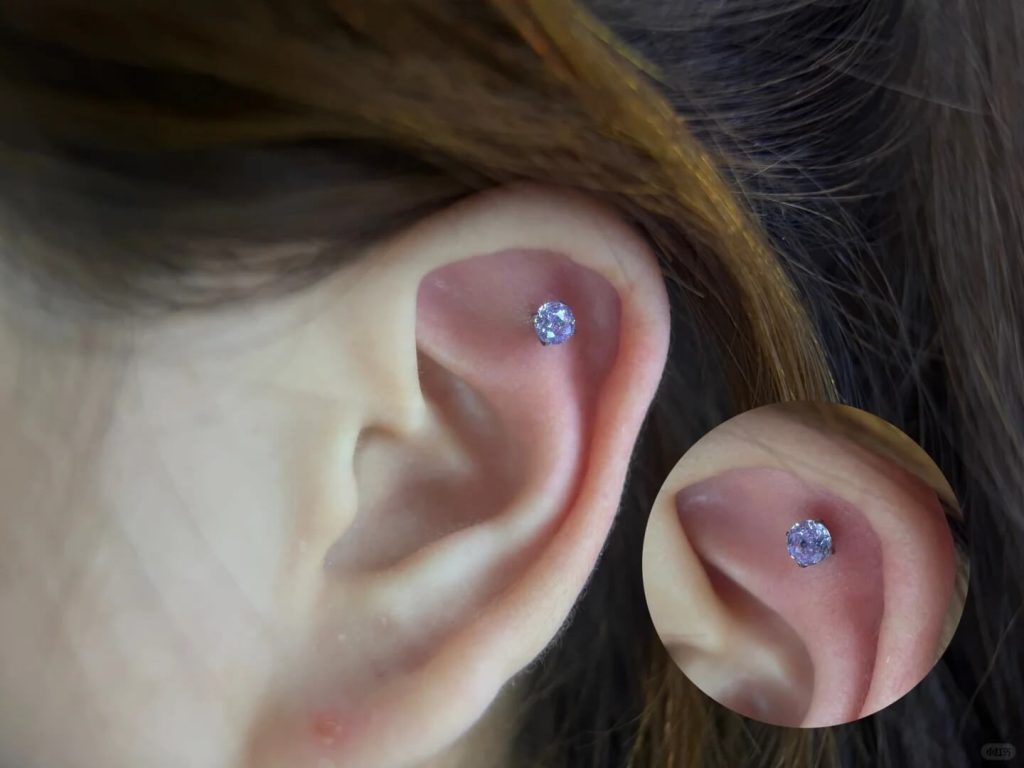
Flat piercing jewelry options are fairly straightforward. The best jewelry for flat piercing healing and comfortis almost always a labret stud. This consists of a flat disc backing, a post, and a decorative front—typically a gem, ball, or another flat disc.
Flat Piercing Starter Jewelry Size
When you first get your flat piercing, you’ll start with a longer bar to accommodate swelling. The recommended flat piercing jewelry size is either a 16-gauge 5/16″ or 14-gauge 5/16″ labret stud. This flat piercing gauge size provides adequate room for the initial swelling and healing process.
You’ll need to keep this longer bar in for at least one month. This allows the area to heal properly and supports healthy flat piercing healing without irritation from jewelry that’s too tight.
When to Downsize a Flat Piercing
After one to two months of flat piercing healing, you can downsize to a shorter post—typically dropping down by about a quarter inch.
Be honest with yourself about the healing progress, or consult your piercer to determine when to downsize flat piercing jewelry. Downsizing too early can cause complications, while waiting ensures comfortable healing.
Flat Piercing Healing Time
The flat piercing healing time is approximately two to three months for complete healing. However, initial healing occurs within the first month, which is why you should keep the longer jewelry in during this period.
Flat Piercing Migration
How to avoid flat piercing migration: sleeping position matters
Flat piercing migration is a common issue caused by pressure during sleep. As a general rule, you shouldn’t sleep on any fresh piercing. This is especially critical for flat piercing sleeping side considerations because of the long initial jewelry.
When you sleep on your piercing for eight hours, your head and pillow create constant pressure. This causes the piercing to migrate from a perfectly straight angle to a slanted one.
To prevent flat piercing migration, build a fort with pillows around your piercing, or use a piercing pillow or travel pillow with your ear in the center hole.
Don’t bump it, knock it, or sleep on it. These precautions ensure your flat piercing healing stays straight and true throughout the process.
What to Avoid During Flat Piercing Healing
Why is my flat piercing not healing? Is flat piercing hard to heal? Rember these!
Never spin, rotate, or play with your flat piercing—these actions interfere with flat piercing aftercare and can delay healing. If you have a scab forming, spinning the jewelry is like picking at a scab—it disrupts healing and can introduce bacteria.
Avoid these products for cleaning:
- Hydrogen peroxide
- Alcohol
- Neosporin
- Bactine
- Bottled “piercing cleaners”
These harsh products can damage healing tissue, delay recovery, and disrupt your flat piercing aftercare routine.
How to Clean Flat Piercing
How to clean flat piercing properly is essential for successful healing and effective flat piercing aftercare. Here are the best methods:
In the shower: Use antimicrobial soap and wash gently around the piercing—not inside the hole, just around it-as part of your flat piercing aftercare routine.
Rinse extremely well for about 20 seconds, holding your head under the water. Make sure no soap, shampoo, or conditioner remains on the piercing.
Saline spray method (recommended): Saline spray for flat piercing is the most efficient cleaning method. Saline sprays are easy to use, which means you’ll actually do it consistently—a crucial step in flat piercing aftercare. Spray the front and back of your piercing twice daily—morning and night. This simple routine provides excellent care without hassle.
Saline soak: You can also use saltwater soaks if you prefer; this is another gentle method for flat piercing aftercare. Mix your own solution or use pre-made saline, and soak the piercing for 5-10 minutes twice daily.
Conclusion for Flat Piercing Healing and Aftercare Tips
To ensure smooth flat piercing healing and lasting results:
- Keep the initial longer jewelry in for at least one month
- Avoid sleeping on the pierced ear to prevent migration
- Don’t touch, spin, or rotate the jewelry
- Clean twice daily with saline spray or antimicrobial soap
- Wait 1-2 months before downsizing to shorter jewelry
- Rinse thoroughly in the shower to remove all product residue
- Watch for signs of irritation and consult your piercer if needed to maintain proper flat piercing aftercare