



Where is a mid helix piercing? When deciding where to place a mid helix piercing, understanding ear anatomy is crucial. This cartilage piercing sits in the middle section of the upper ear. It’s positioned between the top helix and the lobe—creating a balanced look in the mid-range area.
The key to comfortable healing lies in one critical rule: never pierce on the border where cartilage meets skin.
Understanding Ear Cartilage Anatomy: Cartilage vs Skin
Before getting pierced, feel around the middle part of your ear. Run your finger along this area and notice the difference between cartilage vs skin tissue. You’ll feel the skin on the surface, but beneath that, you’ll sense the firmness of the underlying cartilage structure.
The cartilage feels harder and more rigid compared to the soft, flexible skin covering it. This anatomical difference matters because these two types of tissue heal differently. Cartilage has less blood flow than skin, which affects both healing time and comfort during the process.
Understanding this difference helps you make better decisions about proper cartilage piercing placement. When you can clearly identify where the cartilage sits beneath the skin, you’ll better understand why placement matters so much.
Why Avoid Piercing on the Border of Cartilage
The most critical rule for mid helix piercing placement: avoid piercing on the border of cartilage and skin. When a piercing sits right at this border, it bumps against the edge of the cartilage during healing. This creates significant discomfort.
Choose a spot that sits solidly in cartilage tissue or solidly in skin—never on the border where the two meet. If the jewelry constantly rubs against the cartilage edge, you’ll experience ongoing irritation throughout the healing process.
For most people seeking an upper ear cartilage piercing and wondering where is a mid helix piercing best placed, going up into the cartilage provides the best option. This placement ensures the piercing sits fully within cartilage tissue rather than straddling the uncomfortable border zone.
How to Choose Mid Helix Piercing Placement
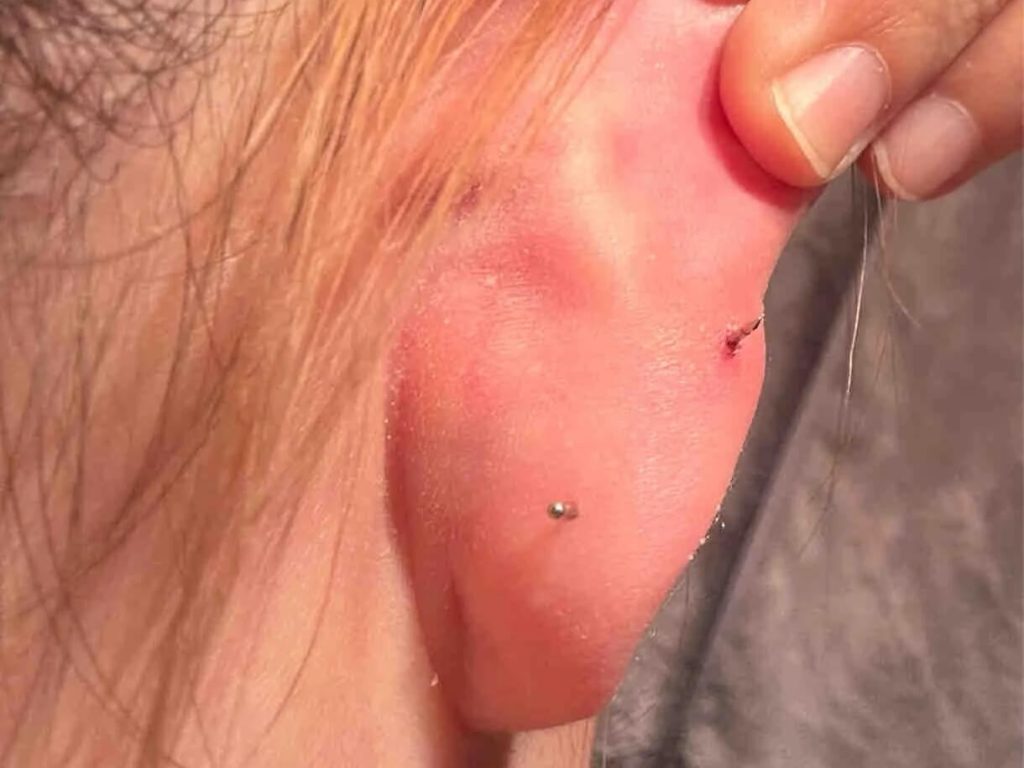
When learning where is a mid helix piercing best positioned and how to choose the placement, start by assessing your ear anatomy. Feel the cartilage before piercing to identify exactly where the cartilage begins and where it remains solid throughout.
Mark the approximate area where you want the piercing. For this client’s ear, the best option sits solidly in the cartilage, positioned in the middle zone of the upper ear. This avoids the border issue entirely.
Your piercer should help you identify the right spot based on your specific ear anatomy. Not every ear is shaped the same, so what works for one person might not work for another. The goal remains consistent: find a location that sits completely in one type of tissue.
Mid Helix Piercing Technique: Punch Method
For this mid helix piercing, the cartilage piercing technique used was a punch rather than a needle. The punch method creates a clean opening through the cartilage tissue. It removes a small circular section rather than separating the tissue like a needle does.
This technique often works well for cartilage piercings because it creates a precise opening. The jewelry—in this case, a standard stud—is inserted immediately after the punch creates the opening.
Quick Mid Helix Piercing Tips
When planning your mid helix piercing, keep these essential placement tips in mind:
- Feel the difference between cartilage and skin tissue before marking your spot
- Choose a location solidly in cartilage or solidly in skin—never on the border. Ask your piercer to show you where is a mid helix piercing typically placed on different ear anatomies
- For upper ear cartilage piercing placement, aim for the middle zone between the top of the ear and the lobe
- Consult with an experienced piercer who can assess your specific ear anatomy
- Remember that cartilage piercing healing time typically ranges from 6-12 months, so proper placement from the start matters
- Avoid common piercing placement mistakes by taking time to identify the right spot before committing
Understanding where is a mid helix piercing ideally located and where to place it on your specific ear anatomy makes the difference between comfortable healing and ongoing issues. By choosing a spot solidly within cartilage tissue, you set yourself up for the best possible outcome.